https://rvanews.com/features/bringing-17th-street-market-back-to-life/112606
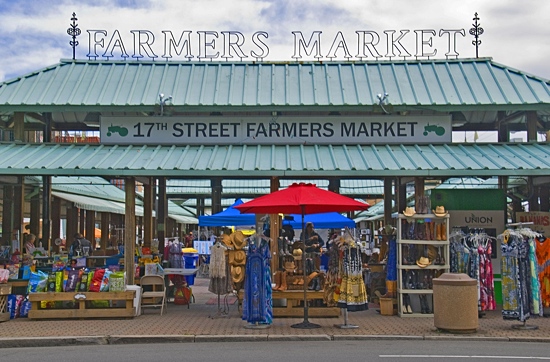
The establishment of farmers markets in Richmond dates back to the 1700s. According to Richmond Gov website, “to know a city is to know its farmers market,” thus arguing that we can learn much about a city, its history, and its community through learning about its farmers markets (“17th Street”). The 17th Street Farmers Market is an especially relevant market in terms of its history, relationship to the city, current renovation plans, and general controversy surrounding it due to these factors. It is a celebrated market in Richmond, as it has provided the sought after benefits of a farmers market, but like the city, it is not without its arguably darker past. Despite the many changes it has undergone throughout history, it has remained a public gathering space for the inhabitants of the city.
The market was initially established in 1737 as a center for commerce for goods of sorts, making it one of America’s oldest markets. It was not officially established as a “public market” until the Virginia General Assembly located to Richmond in 1779 (“17th Street”). Its location is one that has traditionally caused it to be so successful, due to the fact that it was in close proximity to the James River as well as to a main road that connected Richmond to Williamsburg (“17th Street”). Therefore, it was situated at a point that many people would come across for various reasons, and it has been utilized for a variety of public uses. By 1854, the market had expanded greatly, and during the Civil War, it was used as a meeting place and barracks for soldiers, known as the “First Market House” (“17th Street”). Its use as a farmers market began to decline during the mid 1900s, as grocery stores became more prevalent and a more convenient way to obtain food. Today, however it continues to rebuild, innovate, and find new ways to attract customer attendance.
An opinion piece in Richmond Magazine published in 2012 addressed the state of the 17th Street Farmers Market with a focus on its negative aspects and some of the controversy surrounding it. The particular darker history of it being the site of the African slave trade has even resulted in some consumers completely avoiding the market and the area in general, citing that it has “bad juju” (Dovi). Furthermore, the early 2000s did not bring much prosperity for the market, which can be connected to flooding of the area as well as shifting of market managers who each held the position for only brief periods of time. This meant that they were not able to establish successful management of the market and led to many inconsistencies. Other problems that the market encountered included traffic and the fact that customers simply stopped coming. Instead of being a successful weekly market with regular customers, the 17th Street Farmers Market generated 90% of its revenue from its festival events (Dovi).
Currently, there are plans underway to address many of these problems and renovate and revive the market. However, these efforts are not without their own controversy as well. First, some citizens of Richmond do not even see the need to revive it due to the fact that there are already an abundance of markets in and around the city. However, an act of the Virginia General Assembly from 1779 requires that the area remain a public space (“Cornering the Market”). The progress of revamping the market has been slow and steady, and the leadership of the nonprofit Enrichmond has had a significant impact on its progress and overall revitalization. This nonprofit took control over the plans and execution of the market renovation in 2014, as opposed to it being under the control of the city. John Sydnor, a leader in the company Enrichmond, shares his opinions on what the role of the 17th Street Farmers Market should be within the city of Richmond as a whole in saying, “‘it has always been this place…where commerce was done, where the city came together to discuss things back in the time when it was a big open plaza … it was the center of the city. It was the heart of the city’” (Cushing). Syndor’s ideas reflect the vital importance of the market to the city of Richmond, despite its somewhat controversial history. The company Enrichmond has ideas to make the market more of what it used to be and relate it back to its positive uses throughout history, like eliminating some of the festivals in order to focus on the market’s main events and to work towards improving the overall image of the market in the eyes of the public (Cushing).
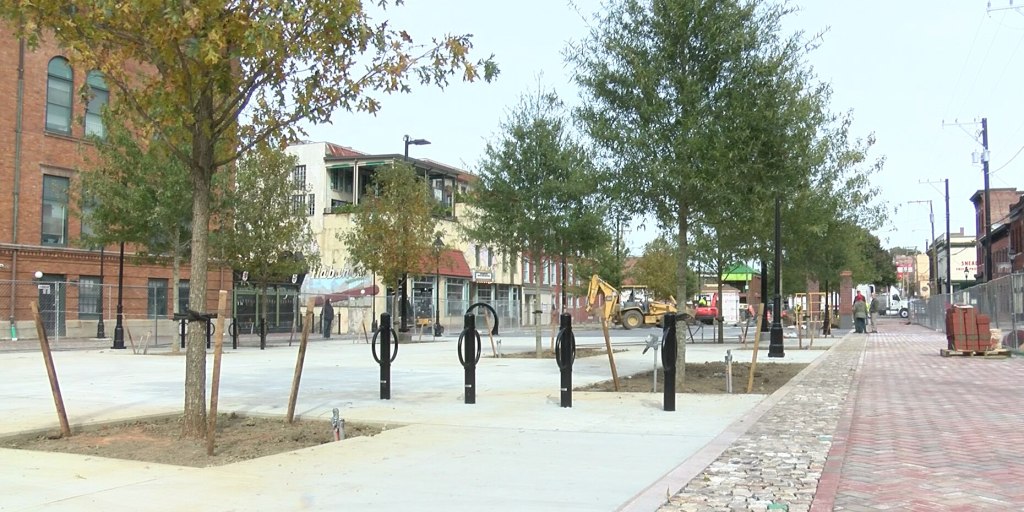
Despite the grand reopening of the market in November 2018, its renovation was not actually completed, causing local restaurants and vendors to be extremely frustrated. What is even worse is that the project is nearly out of funding and unfinished, due to unexpected costs that were encountered during the renovation (Avellino). An image of this partially renovated space can be seen below. In July 2019, the Richmond City Department of Parks, Recreation, and Community Facilities took control over the market from Enrichmond, and thus the project is still something that is very much underway and still causing a stir between the city and local businesses. It is clear that the market is something that is very important to the city both now and throughout the history of Richmond and thus is worth all the efforts being pursued to revive it.
https://www.nbc12.com/2019/05/04/city-richmond-take-control-th-street-farmers-market/
 Farmers Markets and Cities